
Published September 19, 2026
Delivery platforms generally charge restaurants for a commission or marketplace fee for orders generated through their platforms. Depending on the platform, plan, location, and type of order, these costs can take a meaningful percentage of an order value.
For restaurant owners, understanding delivery app commission rates is important because a restaurant can have strong sales while still seeing pressure on its margins.
But there is another side to the equation: how much of each order does the restaurant actually keep?
In this guide, we'll look at how restaurant delivery fees work, what major platforms currently publish for the U.S. market, how commissions affect a typical order, and how direct online ordering can give restaurants another way to accept digital orders.
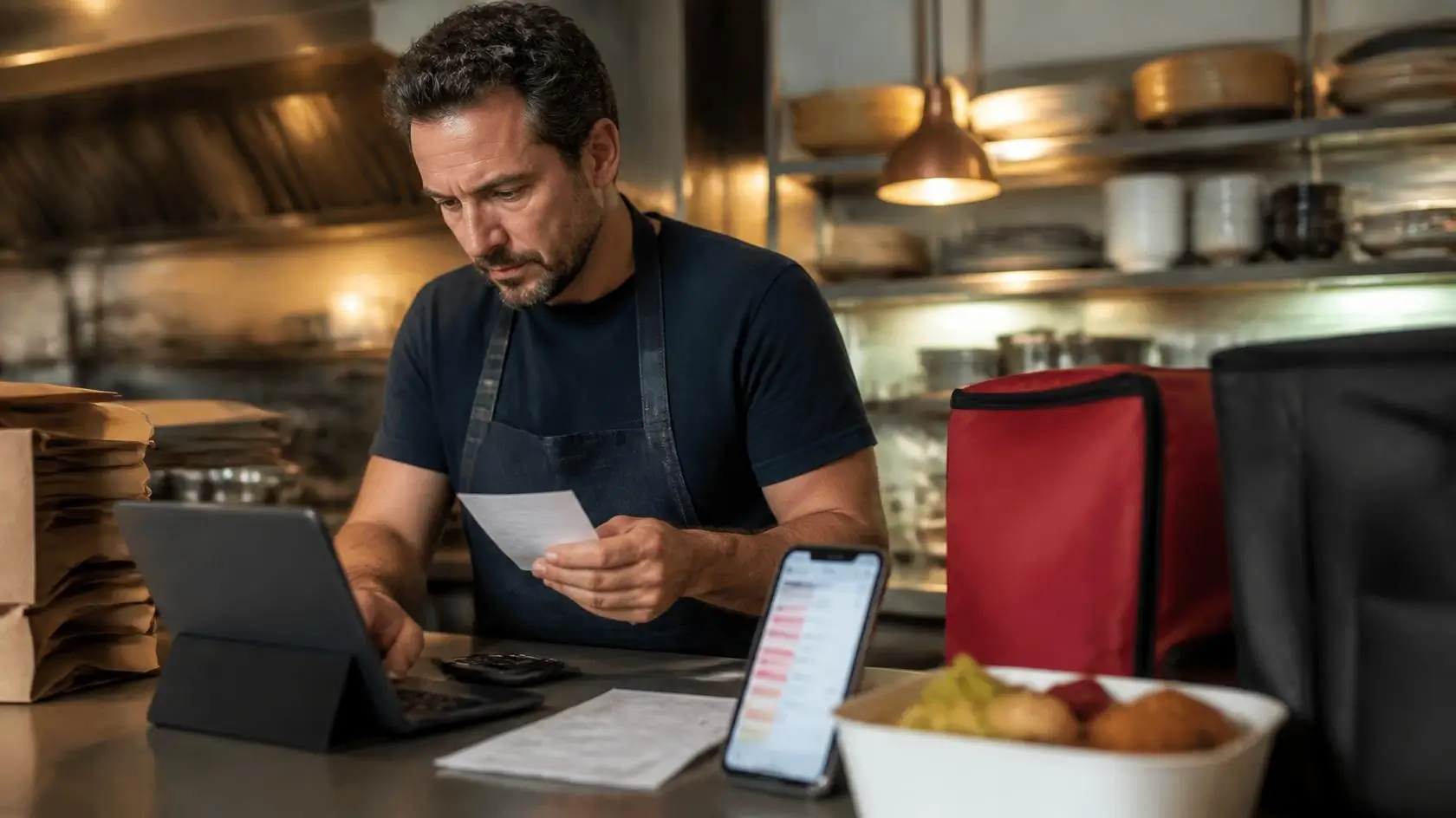
What Are Delivery App Commission Rates?
A delivery app commission is the percentage of an order that a restaurant pays to a third-party delivery platform.
The exact arrangement varies by platform and plan. A commission may help cover services such as customer acquisition, marketplace exposure, payment processing, delivery logistics, technology, and customer support.
For example, DoorDash currently lists three U.S. Marketplace plans with delivery commission rates of 15%, 25%, and 30%, while its published pickup commission is 6% across those plans.
Uber Eats currently lists U.S. Marketplace plans with fees of 20%, 25%, and 30% for its Lite, Plus, and Premium plans respectively. Its published pickup fee can be 7% when the restaurant meets its validated in-store pricing requirements.
These numbers should not be treated as universal rates. Restaurant agreements, countries, cities, plans, promotions, and product offerings may differ.
How Much Do Delivery Apps Charge Restaurants?
There isn't one single delivery app commission rate.
Here is a simplified view of the currently published U.S. marketplace pricing:
| Platform | Example Published Delivery/Marketplace Fee | Pickup |
|---|---|---|
| DoorDash Basic | 15% | 6% |
| DoorDash Plus | 25% | 6% |
| DoorDash Premier | 30% | 6% |
| Uber Eats Lite | 20% | 7%* |
| Uber Eats Plus | 25% | 7%* |
| Uber Eats Premium | 30% | 7%* |
*Uber Eats states that the 7% pickup fee applies with validated in-store pricing; otherwise, the pickup fee can be 10%.
The important point is that the percentage alone doesn't tell the whole story.
A higher fee plan may include greater marketplace visibility or other services. A lower-fee plan may provide less reach. Restaurants therefore need to consider both the cost and the sales generated through the platform.
How Much Does a 25% Commission Cost on a $50 Order?
Let's make the calculations simple.
Suppose a customer places a $50 food order through a third-party delivery marketplace.
At a 25% commission: $50 × 25% = $12.50.
That means $12.50 of the order value goes toward the commission.
The restaurant has $50 − $12.50 = $37.50 remaining before considering its other applicable costs.
Those other costs could include food ingredients, labor, packaging, rent, utilities, taxes, promotions, refunds, and other operating expenses.
This is why restaurant owners should look at restaurant profit margins, not simply total sales.
What Happens to a 30% Commission?
Consider the same $50 order at a 30% commission.
$50 × 30% = $15.
The restaurant would have $50 − $15 = $35 remaining before its other business costs.
Imagine if a restaurant receives 1,000 orders with an average order value of $50. Total sales: 1,000 × $50 = $50,000.
At a 30% commission: $50,000 × 30% = $15,000.
This is $15,000 in marketplace commissions before considering the restaurant's other operating expenses.
This is why understanding delivery app costs becomes especially important as order volume grows.
Third-Party Delivery vs. Direct Online Ordering
There are two different customer acquisition models.
Third-Party Ordering
The customer discovers the restaurant through a delivery marketplace. The platform may provide:
Customer discovery
Marketplace visibility
Ordering technology
Payment processing
Delivery infrastructure
Customer support
In exchange, the restaurant pays the applicable marketplace commission or fees.
Direct Online Ordering
The customer orders through the restaurant's own website or ordering channel. The restaurant has greater control over:
The ordering experience
Branding
Customer communication
Menu presentation
Promotions
Customer relationship
First-party customer data, where legally and appropriately collected
The restaurant may still have payment processing and delivery costs, but the economics can be different from paying a percentage-based marketplace commission.
Why Direct Online Ordering Matters
Imagine a restaurant receives 500 direct online orders per month. The average order value is $40.
Monthly direct-order revenue: 500 × $40 = $20,000.
If those customers instead came through a platform charging a hypothetical 25% commission, the commission would be: $20,000 × 25% = $5,000.
That doesn't mean the restaurant automatically saves exactly $5,000 by switching to direct ordering. Direct ordering can have its own payment processing, technology, marketing, and delivery costs.
But the example demonstrates why restaurants should compare their total cost per order across different channels.
The goal isn't necessarily to eliminate third-party platforms. The goal is to create a healthier mix of marketplace discovery and direct customer relationships.
How Restaurants Can Reduce Delivery App Costs
- 1Track profit by ordering channel
Don't only monitor revenue. Track total orders, average order value, commission, payment fees, delivery costs, discounts, refunds, food cost, and contribution margin — this helps identify which channels are generating profitable sales.
- 2Encourage repeat customers to order directly
A customer who discovers your restaurant through a third-party marketplace doesn't necessarily have to remain dependent on that marketplace forever. Use your website, packaging, receipts, email marketing, loyalty programs, and other appropriate customer touchpoints to make your direct ordering channel easy to find — turning a one-time marketplace discovery into a longer-term customer relationship.
- 3Make your direct ordering experience simple
A direct ordering system should not feel complicated. Customers should be able to find the restaurant, view the menu, customize their order, select pickup or delivery, pay securely, and receive order confirmation. Every additional step can create friction.
- 4Keep your menu and pricing updated
Whether customers order through a marketplace or directly, inaccurate menus can create operational problems. Keep menu items, prices, modifiers, availability, taxes, images, and promotions updated across your ordering channels.
- 5Use third-party platforms strategically
Third-party delivery platforms can be useful for reaching customers who don't know your restaurant yet. Instead of viewing marketplace platforms and direct ordering as mutually exclusive, use marketplaces for customer discovery and direct ordering for customer relationship and repeat business.
How Chefgaa Can Help Restaurants Build a Direct Ordering Channel
Chefgaa is designed to bring restaurant operations together across ordering, billing, payments, inventory, kitchen operations, and reporting.
Chefgaa's restaurant online ordering system provides customers with a branded online ordering experience rather than depending entirely on third-party marketplace ordering.
A restaurant can use its direct ordering channel to:
Accept online orders
Showcase its menu
Support pickup and delivery workflows
Connect ordering with restaurant operations
Provide a branded customer experience
Build a direct ordering relationship with customers
The broader idea is simple: use third-party platforms to help customers discover your restaurant, while building your own direct ordering channel to encourage repeat business.
Delivery app fees vary by platform, market, plan, and order type. In the U.S., DoorDash currently publishes delivery commission rates of 15%, 25%, or 30% depending on the Marketplace plan. Uber Eats currently publishes marketplace fees of 20%, 25%, or 30% for its U.S. plans.
A delivery commission reduces the amount of each marketplace order available to cover food, labor, packaging, rent, utilities, and other operating costs. The effect becomes more significant as delivery order volume increases.
It can be, depending on the restaurant's technology, payment processing, marketing, and delivery costs. Direct ordering may avoid percentage-based marketplace commissions, but restaurants still need to account for the other costs associated with accepting and fulfilling orders.
Restaurants can evaluate their marketplace plans, compare delivery and pickup economics, optimize order values, encourage repeat customers to use direct ordering, and track profitability by channel.
Not necessarily. Third-party marketplaces can provide customer discovery and other services. A restaurant can use marketplaces for acquisition while also developing a direct online ordering channel for repeat customers.
A restaurant online ordering system allows customers to browse a menu and place food orders digitally, usually for pickup, delivery, or both. It can be connected to other restaurant systems such as POS, payments, kitchen operations, and reporting.
Chefgaa provides restaurant technology covering online ordering and broader restaurant operations, including POS, payments, inventory, kitchen operations, and reporting. Restaurants can use its online ordering capabilities to create a direct ordering channel alongside their other sales channels.
Final Takeaway
Delivery apps can bring restaurants valuable customers, but every restaurant should understand the economics behind each order.
A 20%, 25%, or 30% commission can make a significant difference when multiplied across hundreds or thousands of orders.
The solution isn't necessarily to choose third-party delivery or direct ordering. For many restaurants, the more practical approach is to build a combination of both: use marketplaces for discovery, build direct ordering for repeat business, and track the profitability of every channel.
When restaurants understand their numbers and control more of their customer journey, they can make better decisions about where their online orders should come from.